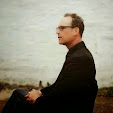
My attention has recently been drawn to the CSM Web Interest Group photostream on Flickr. I don’t know who took the photographs during the delivery of my lecture ‘History and Hardware’ for BAGD students in the stately splendour of CSM’s G12 auditorium at Southampton Row, but I hope they won’t mind me presenting a small selection in this post. I enjoyed giving the talk very much and am looking forward to giving a couple of more in the summer term. Details in all the usual places as and when they become available.
Just before Christmas I received a charming invitation from Virginie Selavy at Electric Sheep magazine to write a short entry for their Alter Ego column, where writers are requested to reveal who they’d most like to be if they were a character in movies. I asked if I could be a cartoon character – which is not much of a stretch for me, I know – and was told that this was permissible. I doubt whether many will be too surprised by my choice. Godzilla might have been my second call, had I needed it, but I’m feeling particularly optimistic at the moment, and Astro Boy’s cheerful heroism is always so inspiring.
You can read the piece, which has just gone online, by clicking here.
From now on Electric Sheep is to be published exclusively online, with a book-length anthology of film writing scheduled to appear in print at the end of the year, so please make sure you establish a good connection with their site. It would be a shame to miss out. The current issue has a killer combination of sex, death and ballet in the form of extensive pieces on The Red Shoes, Suspiria and Dracula: Pages from a Virgin’s Diary. Dance, fools, dance!
With the introduction of the camera, phonograph and the cinematograph into modern culture, the human senses were allowed to exist independently of each other as the mechanical reproduction of sounds, images and movements became a common parlance – we will examine the fallout of this disruption of the senses through contemporary accounts, ranging from inventor Thomas Alava Edison and psychologist Sigmund Freud, philosopher Friedrich Nietzsche and poet Arthur Rimbaud, together with historical analyses from Friedrich Kittler and Walter Benjamin. Lecture to take place at 10.00 on Wednesday February 3 in the MACD main studio at CSM’s Back Hill site in Clerkenwell. Don’t be late.
Context themes to be covered: language, psychology, panoptics, narrative
YouTube clips embedded above (in descending order):
La Sortie de l'Usine Lumière à Lyon, considered one of the first moving pictures of any duration to be screened in public, from a set of ten films exhibited by the Lumière Brothers in Paris in 1895.
American dancer Loie Fuller performs her ‘Serpentine Dance’ for the kinetograph. In Paris she was first known as ‘L’ouie’ – the French word for a sense of hearing. She was renamed ‘Loïe’: a corruption of the early French ‘L’oïe’, meaning ‘receptiveness’.
Maria’s Dance from Frizt Lang’s 1926 silent movie Metropolis: is this a woman we see dancing – or a machine?
I am beginning a new lecture series for MA Communication Design students, taking place in the MACD Main Studio at CSM’s Back Hill site in Clerkenwell from 10.00 to 11.00 every Wednesday morning. Information on each lecture, the themes covered, together with suggested reading and viewing, will be posted on this blog at least a couple of days before it is to be delivered, giving you a chance to do some preparatory work beforehand, should the mood take you. There will be eight lectures in this series. Dates, times and subjects will be posted on this blog’s Google calendar app in due course: details on the first lecture will follow immediately after this post. Now be gone – the Great Oz has spoken.
In January 1996, as we approached the edge of a new millennium, Wired published an exclusive interview with Marshall McLuhan in which he discussed at great length the effects that the new digital technologies were having upon our most basic perceptions. He emphasized the importance of promoting inefficiency among the business communities of the twenty-first century, argued that ‘the product promotes the consumer’ and dismissed cyberpunks as mere ‘sentimentalists’. In fact, the author of Understanding Media seemed remarkably alert and well informed for someone who had actually been dead for more than fifteen years. As citizens of the digital regime, we have long since grown accustomed to such intrusions.
Understanding media in the digital regime is increasingly to approach them as a set of information-rich environments that influence today’s communication strategies and practice – using the writings of McLuhan, Baudrillard and Virilio, we will analyse this approach to media in terms of the narrowing gap between existing data streams and emerging platforms – where does your practice as a communication designer currently exist and where will it be tomorrow?
Context themes to be covered: time/space, language, politics, narrative
‘There’s a particularly vibrant, very loose cultural network in London at the moment one that incorporates music and sound, ideas and information, visual arts and almost anything else you’d care to imagine. It’s inevitable that these people, places and events all bounce off and influence each other in a kind of sub-cultural Brownian Motion.’ – Mark Pilkington
Strange Attractor is well named. There’s really no escaping it. Starting out as a series of live events, it has slowly transmuted into an annual publication, set up an online clearinghouse for the weird and the wonderful and recently made its first move towards establishing itself as a publishing house. ‘Strange Attractor celebrates unpopular culture,’ runs its mission statement. ‘We declare war on mediocrity and a pox on the foot soldiers of stupidity. Join us.’ Who could possibly resist such a challenge? Sooner or later you have to get involved.
The Strange Attractor Salon is still running for another week, so get your ass down there while you still have one worth saving. History waits for nobody.
Pictured above: a view of the west wall; the south wall, featuring prints by Julian House (above) and John Coulthart (below); Andy Sharp (AKA English Heretic) goes into a dream by the meridian stretch of the east wall; Mark Pilkington gets inspired at the north wall, before work by Drew Mulholland (above MP), Savage Pencil (immediately behind MP) and Eric Wright (to the west of MP).
The Planet Mars, I’m happy to report, remains everyone’s holiday destination of choice, which meant that the most recent live version of the audiovisual performance based on my book Welcome to Mars took place before a capacity audience at Viktor Wynd Fine Art. Not one of the gallery’s old tube-metal school assembly chairs was left unoccupied, with standing-room only at the back for latecomers.
It was a real pleasure to be working once again with Bruce Woolley and Mark Pilkington providing a live electronic accompaniment to my reading. The result was a busy and intense set that drew a warm response from those who attended. My thanks to everyone involved, particularly Agent Jbot who took these pictures. And to Bruce and Mark: my deep appreciation and respects as always.
Pictured above: two views of KH at the microphone; Bruce Woolley listening in to the soul of the machine; Mark Pilkington at his electronic prayer mat.
Ken Hollings is a writer based in London. His work appears in a wide range of journals and publications, including The Wire, Sight and Sound, Strange Attractor, Frieze, Noon and Satori, and in numerous anthologies and collections. His novel Destroy All Monsters was hailed by The Scotsman as ‘a mighty slab of trippy, cult, out-there fiction, mind-bending reading’. He has written and presented critically acclaimed programmes for BBC Radio 3, Radio 4, Resonance FM, NPS in Holland and ABC Australia. Ken is the author of Welcome to Mars, The Bright Labyrinth, The Space Oracle, Inferno and Purgatory - all available from Strange Attractor Press/MIT. His latest book 'Paradise: The Trash Project Volume Three' came out in autumn 2024. Look out for 'The Ken Hollings Reader: Digitally Restored and Remastered' a comprehensive overview of his writings, coming soon from Strange Attractor Press/MIT. His album with Howlround as The Howling, 'Incredible Night Creatures of the Midway', is currently available from The Tapeworm.

.jpg)
.jpg)
.jpg)



 Posts
Posts

